Six Senses London and The Whiteley’s Second Life
London’s grand department stores were once theatres of modern life: places to see and be seen, to encounter new materials, new technologies and the changing rituals of the city. At The Whiteley in Bayswater, that social infrastructure has acquired a markedly slower purpose. Six Senses London, open since March, turns the former emporium into an urban retreat whose most persuasive gesture is not escape from the city, but a more deliberate way of moving through it.
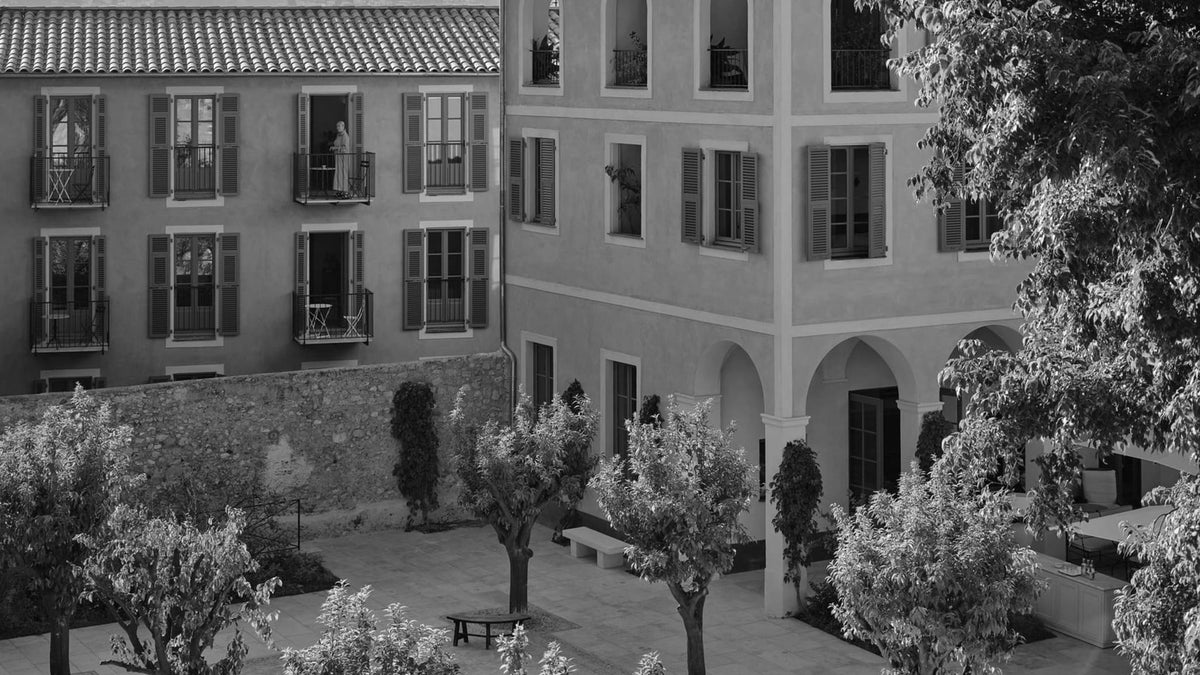
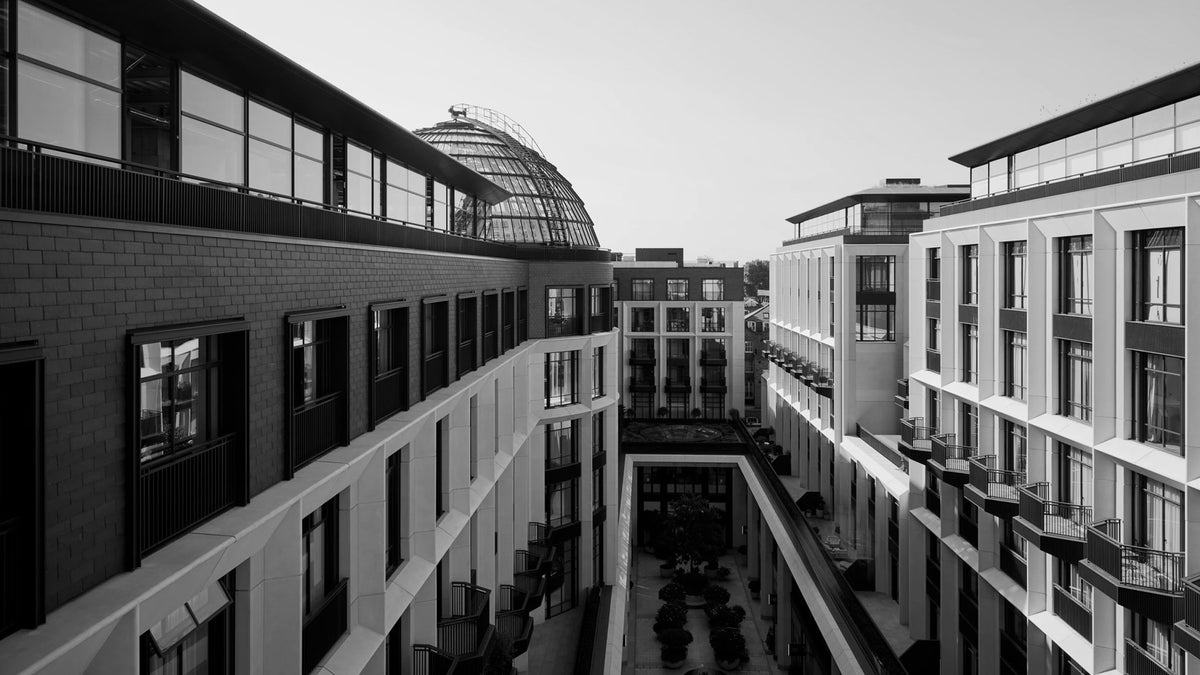
The hotel occupies part of the Whiteley redevelopment near Hyde Park and Notting Hill, bringing 109 rooms and suites, 14 residences, a spa and the first Six Senses Place members’ club into a building with a long public memory. The address is not treated as a blank architectural shell. Its restored Grade II-listed façade, stair and civic proportions are central to the experience. ([sixsenses.com](https://www.sixsenses.com/en/corporate/media-center/press-releases/2026/six-senses-london-opens-at-the-whiteley/))
An emporium becomes a sequence
The original Whiteley was built around circulation: escalators, counters, vitrines and the pleasure of discovery. Six Senses London retains that sense of sequence, while changing its tempo. The interiors by AvroKO, developed with EPR Architects, draw on the visual language of the Great Exhibition rather than reproducing period decoration. Deep green marble, dark timber, pale plaster, planting and carefully calibrated pools of light lend the public rooms a residential gravity without making them feel overly domestic.
At the centre is the grand staircase, formerly the department store’s defining gesture. It was dismantled, extended and rebuilt by hand in Devon in a collaboration involving Foster + Partners and The Hub, before being returned beneath the glass dome. The result gives the hotel something increasingly rare in contemporary hospitality: a meaningful vertical route. One does not simply arrive in a lobby and disappear into a lift; the building encourages a gradual reading of its spaces. ([sixsenses.com](https://www.sixsenses.com/en/corporate/media-center/press-releases/2026/six-senses-london-opens-at-the-whiteley/))
This is especially effective in a city hotel, where public and private time often collapse into the same compressed schedule. The Whiteley’s new programme accepts that guests may have arrived from a meeting, a gallery, a walk through Kensington Gardens or a long-haul flight. Its architecture makes room for the interval between one state and the next.
The cultivated pause
The wellness offering is substantial, but its appeal lies less in the technology than in how it has been given architectural coherence. The 2,300-square-metre Six Senses Spa London combines a 20-metre pool, a magnesium pool, hammam, flotation, cryotherapy, movement spaces and treatment rooms. Rather than scattering these facilities as a checklist of contemporary wellness, the hotel presents them as a continuous circuit between exertion, water, warmth and rest. ([sixsenses.com](https://www.sixsenses.com/en/corporate/media-center/press-releases/2026/six-senses-london-opens-at-the-whiteley/))
The Alchemy Bar extends that thinking into ritual. Guided by an Anglo-Celtic seasonal calendar, it uses locally foraged herbs for tinctures and tonics that appear across treatments, steam rituals and the hotel’s food and drink. This is a more interesting proposition than a generic wellness menu: an attempt to give the building its own small domestic language of preparation, infusion and pause.
There is also a members’ dimension. Six Senses Place occupies the upper levels as a social and wellness club, with programming structured around shared meals, talks and seasonal gatherings. Private clubs can too easily become hermetic displays of access; here, the more considered idea is that a central London building designed for public encounter still has a role to play as a place of repeat rituals and familiar rooms.
British craft without nostalgia
The Whiteley’s transformation works because it does not confuse heritage with stasis. Its exterior remains recognisably of its period, while the hotel’s interiors acknowledge the city’s present-day appetite for spaces that are both composed and adaptable. Herringbone floors, curved light fittings, framed planting and softly structured upholstery create warmth, yet the scale of the public rooms retains the confidence of a major urban institution.
The culinary programme follows the same line. Whiteley’s Kitchen, Bar and Café is intended as a neighbourhood address rather than an isolated hotel restaurant, with vegetable-led cooking, preservation and fire forming part of its approach. In a building that once made consumption its great spectacle, the shift towards fermentation, seasonality and the measured conviviality of a bar feels quietly apt. ([sixsenses.com](https://www.sixsenses.com/en/corporate/media-center/press-releases/2026/six-senses-london-opens-at-the-whiteley/))
This balance of restoration and reinvention has made Six Senses London one of the more closely watched hotel openings of 2026. Wallpaper* noted its use of the former department store’s heritage façade, restored circular staircase and subterranean spa as a new kind of West London retreat. ([wallpaper.com](https://www.wallpaper.com/travel/hotels/best-new-hotels)) The observation matters because the project is not asking visitors to forget the building’s past. It asks them to inhabit it differently.
A wardrobe for the in-between
The most memorable hotels understand that rest is not the opposite of sociability. It is the condition that allows sociability to feel generous rather than performative. At The Whiteley, that idea plays out in the passage from suite to staircase, pool to terrace, bar to street. The spaces are designed for a guest who may wish to withdraw, but not entirely disappear.
That is also the register in which Swiss-designed unisex loungewear by ILHEMENT feels relevant: considered pieces with generous proportions, intended to move easily between private rooms and shared spaces without turning either into a stage. The appeal is not costume, but continuity.
Six Senses London succeeds because it gives an old commercial monument a new form of public life. Its luxury is neither theatrical nostalgia nor technological excess. It is the quieter confidence of a building that understands movement, ritual and the enduring pleasure of having somewhere composed to pause.