Hôtel du Couvent and Nice’s Art of the Inner Garden
Behind an unassuming gate in Vieux Nice, Hôtel du Couvent makes a persuasive argument for the hotel as a self-contained world. The former convent is not treated as a backdrop to contemporary luxury, nor reduced to a picturesque lesson in monastic austerity. Instead, its restoration uses the accumulated logic of the place—enclosure, shade, passage, cultivation and pause—to make a stay feel ordered by something more lasting than novelty.
That proposition has become newly visible this summer, as recent architectural coverage returned to the long transformation of the property and the unusual care taken to retain its irregular fabric. In a city often experienced at promenade speed, Hôtel du Couvent asks for a different rhythm: arrival through old streets, a threshold beneath the hillside, then a gradual release into cloisters, terraces and an inner garden.
A convent restored without theatricality
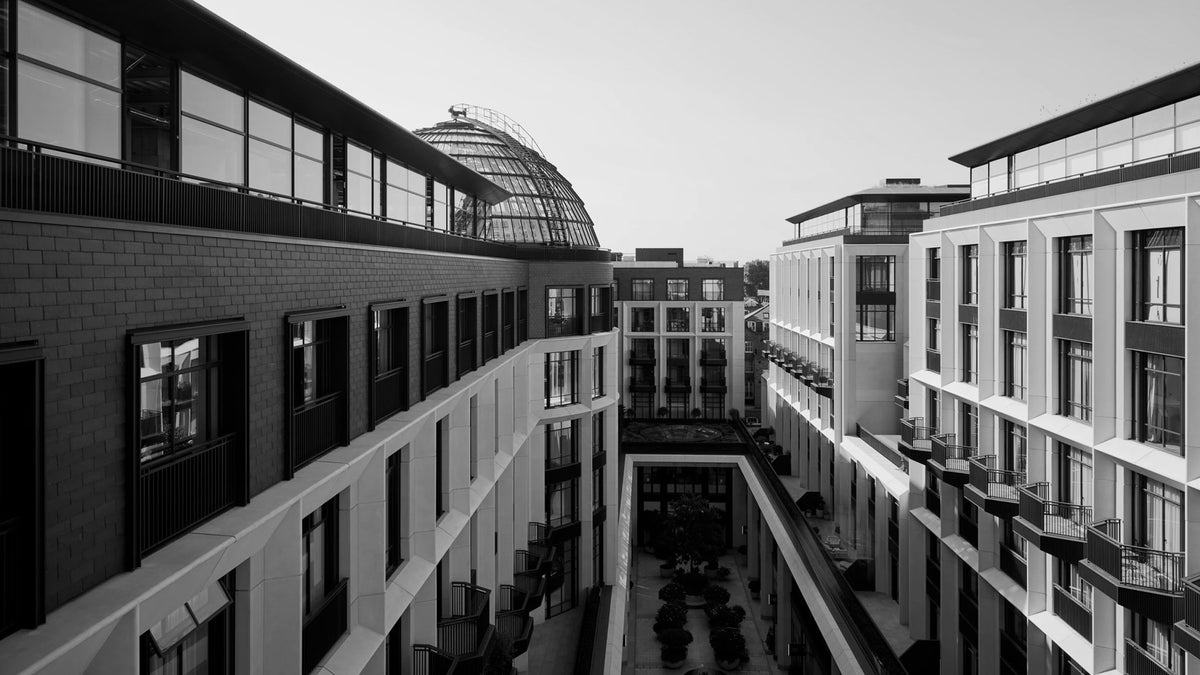
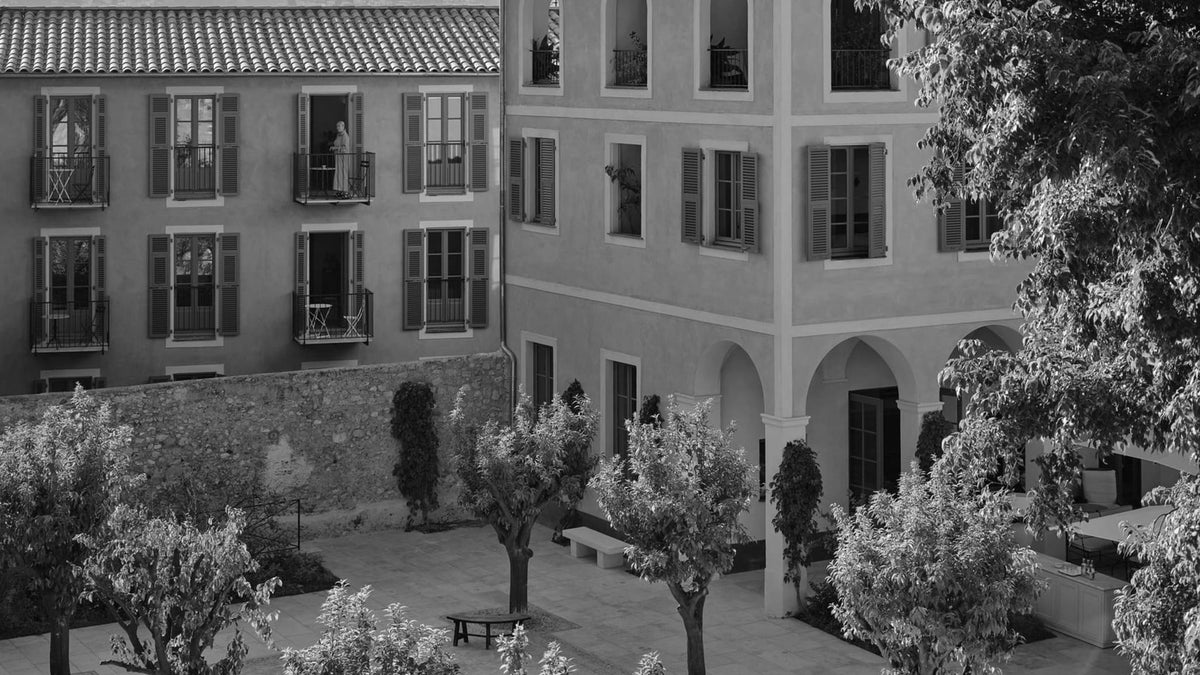
The hotel occupies a former 17th-century convent in Nice’s old town, shaped over centuries by religious occupation, civic reuse and eventual disrepair. Its conversion took years rather than a season, bringing together Studio Mumbai and Studio Méditerranée for the architectural restoration, with Festen Architecture responsible for the interiors. The result is not a seamless recreation of the past. Uneven walls, varied ceiling heights and historic openings were retained, allowing the building’s particular proportions to set the terms of the new rooms and shared spaces.
This restraint is central to the project. Rather than inserting a uniform hotel language into every corner, the designers allowed difference to remain legible: a corridor turns unexpectedly, a room is shaped by a pre-existing window, a stair gives way to a quieter landing. These are not imperfections corrected into blandness; they are the evidence of a building that has lived several lives.
Festen’s interiors extend that approach with terracotta, oak, limewashed surfaces, collected furniture and an atmosphere closer to a cultivated residence than an identikit luxury address. There is warmth in the palette, but it is carefully held. The best spaces avoid both ecclesiastical pastiche and Riviera gloss, preferring the grounded material language of stone, timber, linen and age-softened colour.
The inner garden as the real lobby
Hôtel du Couvent’s strongest gesture may be its garden. Spread across terraced ground behind the old walls, it introduces another scale of hospitality: not the ornamental forecourt of a grand hotel, but a planted interior landscape in which time can be spent without an appointment. Citrus trees, olive trees, herbs and flowering plants soften the transition between the dense city outside and the quieter life within.
The garden also explains why the hotel feels more like a small neighbourhood than a sealed retreat. A bakery, herbalist, restaurants, market and cultural spaces give the property an active daily texture. The Saturday market in the Cour des Orangers is particularly telling. It welcomes local producers and visitors into the hotel’s internal square, restoring a social function to a place that might otherwise have become private spectacle.
This is hospitality with a civic edge. The hotel protects privacy where it matters—within rooms, gardens and bathing spaces—while allowing selected rituals of food, reading and gathering to remain porous to the city. It is an intelligent answer to the common contradiction of luxury travel: the wish to withdraw without entirely leaving a destination behind.
Bathing as a sequence, not an add-on
The Roman-inspired thermal baths reinforce the property’s interest in sequence. Rather than presenting wellness as an isolated service, the baths are conceived as a progression through heat, water, cooling and rest. Their darker, more mineral character offers a deliberate counterpoint to the brilliant light of Nice beyond the walls.
Elsewhere, pools and terraces open the experience outward again, towards the tiled roofs of the old town and the Mediterranean horizon. The movement between these settings is what gives the hotel its depth: a guest can pass from a shaded room to a salon, garden, pool or rooftop view without feeling pushed through a programme. Each space changes the temperature, sound and social register of the stay.
That spatial choreography matters because the hotel’s luxury is not dependent on spectacle. It lies in the permission to linger: coffee in the garden before the city wakes, a late return through the cloister, a swim framed by foliage, an unhurried hour in the baths. The building creates occasions without over-naming them.
A Riviera stay with an older intelligence
Nice has long been a city of arrival, but Hôtel du Couvent locates its appeal away from the familiar theatre of the seafront. Its view of the Riviera is interior before it is panoramic: markets, medicinal plants, thick walls, tiled roofs, filtered sun and the close grain of old streets. The Mediterranean is present, but not overplayed.
For a resort wardrobe, that suggests a different kind of ease. The point is not to dress for display, but for the shifts between one room and another: a morning suite, a shaded table, a pool terrace, an early aperitif in the cloister. This is where sartorial loungewear by ILHEMENT finds a natural parallel—Swiss-designed unisex pieces with generous proportions that can move calmly between private rooms and shared spaces.
Hôtel du Couvent succeeds because it understands that restoration is not simply about preserving surfaces. It is about recovering a pattern of life from a building and giving it contemporary usefulness. In Nice, that pattern is made of thresholds, cultivation, bathing and measured sociability: an inner garden held apart from the city, yet still connected to it.