Seaton House and the Civilised Rhythm of St Andrews
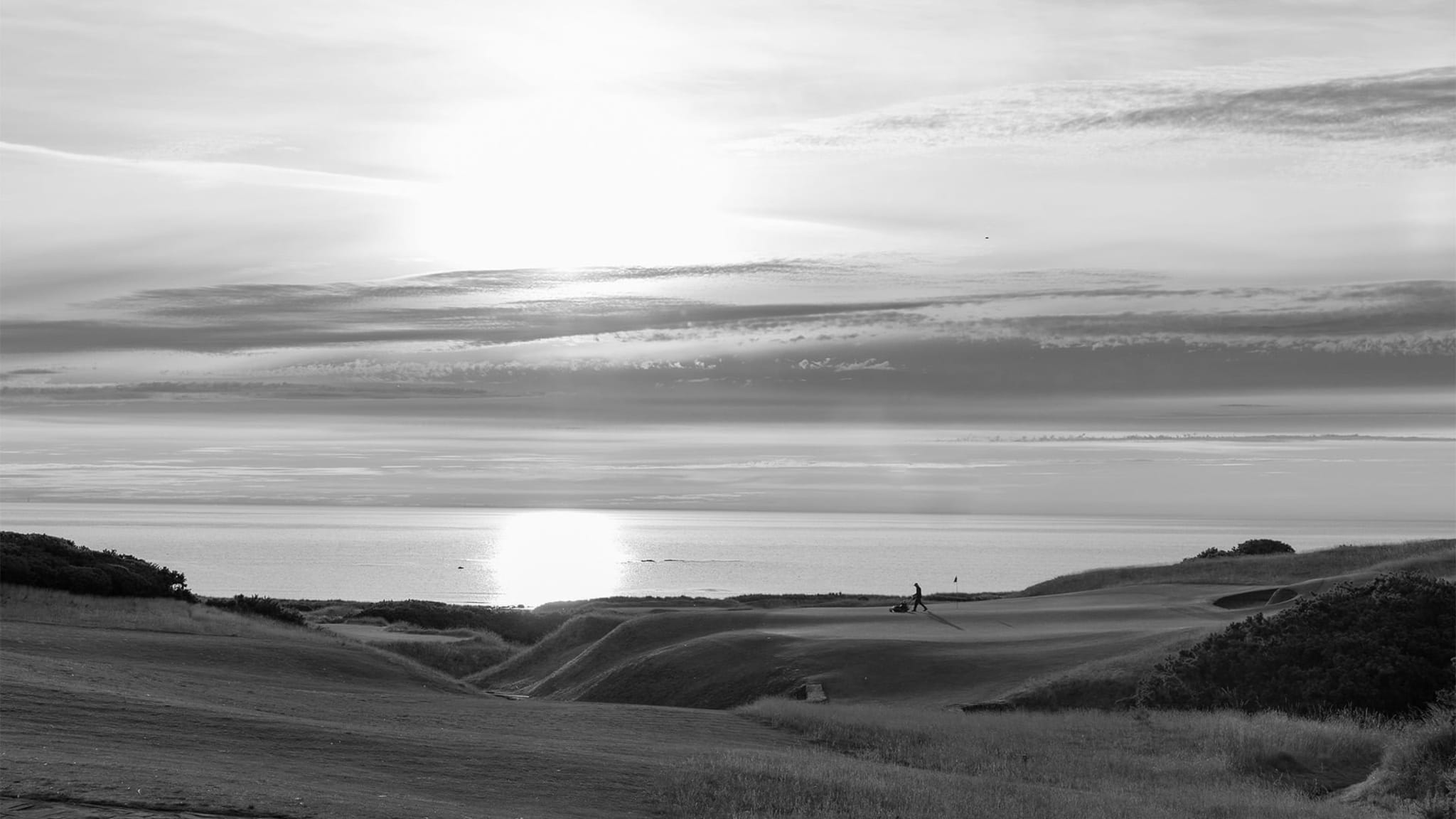
St Andrews has long understood that a resort can be organised around ritual rather than escape. Here, the daily drama is not manufactured. It is carried in the sound of the North Sea beyond West Sands, the measured procession along The Scores, the changeable light on old stone and the quiet concentration of people making their way towards the links. Seaton House, a newly restored local landmark on this celebrated coastal road, offers a timely reading of that enduring rhythm.
The property occupies two mid- to late-19th-century buildings that were brought together as the Scores Hotel in the 1930s. Its recent restoration returns the address to hospitality with a notably domestic scale: 42 bedrooms, including six suites and three junior suites, rather than the impersonal abundance often associated with golf destinations. The point is not to compete with the landscape but to give it a more composed threshold.
A house shaped by the shore
St Andrews is often reduced to a single sporting association, yet its appeal lies in the coexistence of several older worlds. The medieval town, university buildings, ruined cathedral, narrow lanes and broad beach create a place whose pleasures are gathered on foot. The coast is exposed, sometimes severe, and therefore all the more persuasive. A morning may begin in clear, silvery calm and close under a slate-coloured sky; both conditions suit the town.
Seaton House sits only yards from the Old Course’s 18th green, but the restoration wisely does not treat its location as an excuse for sporting theatre. Instead, its rooms and shared spaces draw from the local geography: West Sands, the sea and the cultivated greens of the links. The hotel’s five private terraces make this relationship especially tangible. Two look towards the beach and first tee, while three turn inward to the private garden. This small distinction is important. It allows guests to choose between exposure and enclosure, the open horizon and the shelter of planting.
Such choices are central to emotional luxury. Privacy is not merely a locked door or a larger suite; it is the ability to regulate one’s own degree of contact with a place. At the shore, a terrace becomes less a feature than a private observatory: somewhere to sit after a late lunch, to watch the weather cross the bay, or to take breakfast without the need to perform leisure publicly.
Scottish references, used with restraint
The interior language takes its cues from Scottish materials and traditions without turning them into decoration for decoration’s sake. Oak panelling, timber flooring, tailored textiles, bespoke rugs and carpets establish a sense of permanence. Thistle embroidery, woodland motifs and restrained checks appear alongside tartans associated with the project’s history, including that of George Rae, the original architect of Seaton House. The tartans of people involved in the renovation have also been worked into the guestrooms as bed throws.
This is an intelligent use of local reference. Textiles hold a particular authority in a northern coastal setting because they answer a practical need before they declare an identity. A woven throw, a substantial curtain or a densely made carpet gives physical weight to a room, tempering the glare of sea light and the chill that can arrive even in high summer. The best hotel interiors do not simply illustrate their location; they calibrate the experience of inhabiting it.
Seaton House is at its most convincing when it follows this principle. The building does not attempt to erase its age, nor does it rely on antique gestures alone. Instead, old-fashioned virtues — solidity, tactility, proportion and a room’s capacity to settle a guest — are allowed to govern the newer layer. The result is a hotel that appears designed for returning to, rather than merely being seen in.
The return of the long afternoon
There is a particular kind of time that coastal towns make possible. It begins after the morning’s purpose has passed: after a walk along West Sands, a visit to the ruins, or several hours outside in the wind. It is the unclaimed stretch before evening, when one changes clothes, reads, takes tea or a drink, and lets the day become less scheduled. Grand hotels once understood this interval instinctively. Their lounges, terraces and bars were not ancillary spaces but settings for a civilised pause.
At Seaton House, this idea is carried through the public rooms. Bow Butts Bar uses warm timber and earthy green tones to create an inward-looking counterpoint to the exposed seafront. Ondine Oyster & Grill, led by chef patron Roy Brett, draws on the proximity of sea and land, while the Board Room has been conceived with the familiarity of a private kitchen rather than the formality of a conventional hotel restaurant. The hospitality proposition is therefore less about spectacle than rhythm: a succession of places in which to land.
That rhythm matters in a destination where the outdoors can be demanding. Scottish hospitality has always been at its finest when it provides warmth without fuss: a dry place for a coat, a room with deep comfort, a table that welcomes lingering, a bar that grows more appealing as the weather turns. These are modest gestures in theory, but they are the gestures that make a stay memorable.
Rest as a matter of composition
The renewed house also suggests a broader shift in resort culture. The most compelling properties are moving away from relentless programming and towards environments that give guests permission to set their own pace. In St Andrews, that may mean golf for some, but it can just as readily mean an early walk beside the water, an afternoon in the garden, oysters at dusk, or an unplanned hour by a bay window with the sea in view.
Clothing belongs naturally to this pattern of rest. The ideal wardrobe for such a place is not overtly sportive, nor overly formal. It is composed for movement between room, terrace, shoreline and dining room: considered layers, soft structure and materials that become more persuasive in changing weather. This philosophy also informs ILHEMENT’s approach to sartorial resort loungewear.
Seaton House does not ask St Andrews to become something else. Its strength lies in accepting the town’s elements: salt air, old architecture, difficult skies and traditions that have acquired meaning through repetition. In doing so, it makes a persuasive case for the smaller heritage hotel as a place not of retreat from the world, but of closer attention to it.