Rosewood Schloss Fuschl and Austria’s Lakeside Art of Retreat
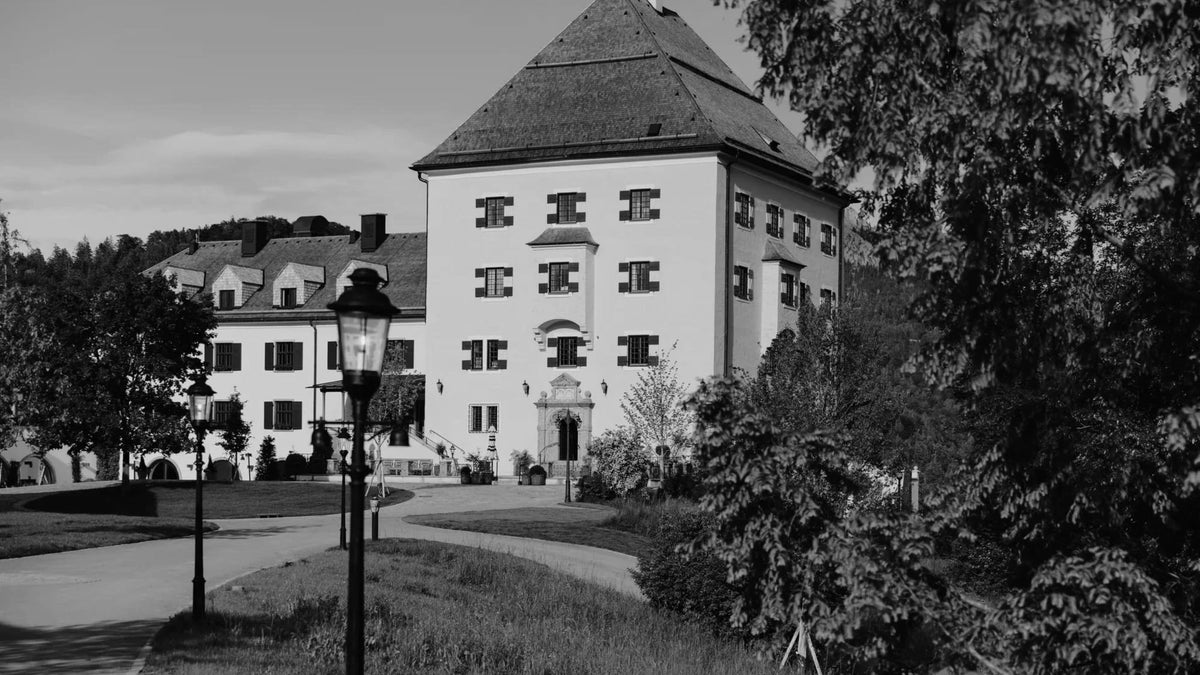
There are Alpine hotels that treat the landscape as an exhilarating backdrop, and there are those that understand it as a discipline. Rosewood Schloss Fuschl belongs firmly to the latter category. On the eastern shore of Lake Fuschl, not far from Salzburg, the restored castle does not attempt to compete with the water, woodland and limestone peaks around it. Instead, it gives them a sequence: arrival through the old estate, time in the rooms of the castle, a long view from the terrace, then the more private pleasures of the lake.
The proposition is unusually complete. A fifteenth-century hunting lodge for Salzburg’s prince-archbishops, Schloss Fuschl became a hotel in 1947 and reopened under Rosewood in 2024 following an extensive restoration. Today it holds 98 rooms, including 42 suites and six chalets, but its character comes less from scale than from the negotiation between the historic castle and its later additions. It is a place where a stay can move naturally from old masonry and timber to lake water, then back indoors for tea, a fireside drink or an unhurried dinner.
A castle designed around the lake
Lake Fuschl is not a theatrical Alpine basin. Its appeal is more composed: blue-green water, dense forest at the shore and a horizon softened by pastureland before the higher mountains appear. That visual restraint is central to the hotel’s atmosphere. The castle sits directly at the water’s edge, while the newer accommodation and wellness areas are arranged to keep the lake continually present without turning every room into a viewing platform.
The restoration is also alert to the fact that heritage cannot be reduced to period styling. G.A Group shaped the public spaces, spa and many guestrooms around regional references to flora, fauna and the changing seasons. Austrian studio Bauer Stahl approached the heritage suites and chalets with a more locally rooted hand. Throughout, material decisions are deliberately legible: pale stone, warm timber, traditional carved chairs, textile depth and colour that follows the greens, browns and mineral greys outside.
The result is not an attempt to freeze the castle in an imagined past. Its older, irregular rooms retain their own proportions and quirks, while the newer spaces offer a quieter contemporary counterpoint. That distinction matters. The hotel does not disguise the difference between a medieval structure and a modern addition; it uses the passage between them to make history tangible.
Public rooms with a private-house instinct
Grand hotels are often judged by their ability to make shared rooms feel inhabited rather than merely impressive. Schloss Fuschl understands this particularly well. The Schloss Bar, with its reinstated low timberline fireplace, provides a darker, more intimate centre of gravity. Nearby, the Sisi Tee Salon turns the old European ritual of tea and pastry into something gently residential rather than ceremonious. The Vinothek, meanwhile, directs attention towards Austrian wine and regional produce rather than imported spectacle.
There is a useful tension here between the castle’s historical associations and the informality of a lakeside stay. The Seeterrasse loosens the tempo during the day, while the See Club brings cabanas and waterside dining unusually close to the main building. Such elements could easily have felt imported from another resort vocabulary. At Fuschl they work because the water is not decorative. It is part of the estate’s physical logic, visible from the castle, reached by paths and jetties, and folded into the daily rhythm of the place.
The hotel’s collection of Old Masters deepens that sense of lived-in cultural texture. Rather than being isolated as a formal gallery exercise, works are distributed through corridors and public rooms. The gesture makes the hotel feel less like a themed heritage project and more like a house whose contents have accumulated over time. It also gives the act of moving through the building a purpose beyond finding one’s room.
Rituals with regional weight
Hospitality becomes persuasive when its rituals have a reason to be there. At Schloss Fuschl, that reason is the Salzkammergut itself. The hotel’s programme draws on fishing, herbal knowledge, lake travel, regional cooking and Salzburg’s cultural history. Guests can join guided excursions with a local herbalist, take to the water in an electric boat or visit the nearby fishery with its long relationship to the lake. These are specific activities, but their greater value is atmospheric: they make the surrounding landscape feel active rather than scenic.
The same principle reaches the spa. Asaya occupies 1,500 square metres and includes indoor and outdoor pools, treatment rooms, saunas and a steam bath, yet its strongest quality is its avoidance of generic wellness language. The design returns repeatedly to timber, stone and the measured light of the Alpine setting. Even the most contemporary facilities are asked to participate in the larger sequence of lake, forest, warmth and rest.
This is what gives the hotel its particular resort intelligence. It is possible to spend a day here without treating leisure as a schedule: a swim before breakfast, a walk along the lake, a slow lunch, perhaps a pause in the spa before returning to the bar as the building grows quieter. The most compelling luxury is not excess but the permission to remain in one place long enough for its details to register.
A wardrobe for the spaces between
Schloss Fuschl’s rooms suggest an approach to resort living that is more considered than theatrical. The right clothes are not costumes for the castle; they should be capable of following the day through its changing degrees of privacy. A generous shirt or softly structured trouser can feel entirely appropriate after a late breakfast, on a terrace by the lake or when returning through the public rooms at dusk.
That is where sartorial resort loungewear finds a natural parallel. ILHEMENT’s Swiss-designed unisex pyjamas are most convincing when understood not as something confined to the suite, but as pieces with enough proportion and presence to move from suite to lobby, terrace and everyday life. At Schloss Fuschl, that transition is less a performance than a continuation of the hotel’s own sensibility: private ease carried into shared spaces with restraint.
Rosewood Schloss Fuschl succeeds because it does not mistake historic architecture for an excuse to stand still. The castle, the art, the water and the rituals around them are all given room to remain distinct. Together they make a persuasive case for the lakeside hotel as a place not of escape from culture, but of closer attention to it.