Romègas Hotel and Valletta’s New Palazzo Ritual
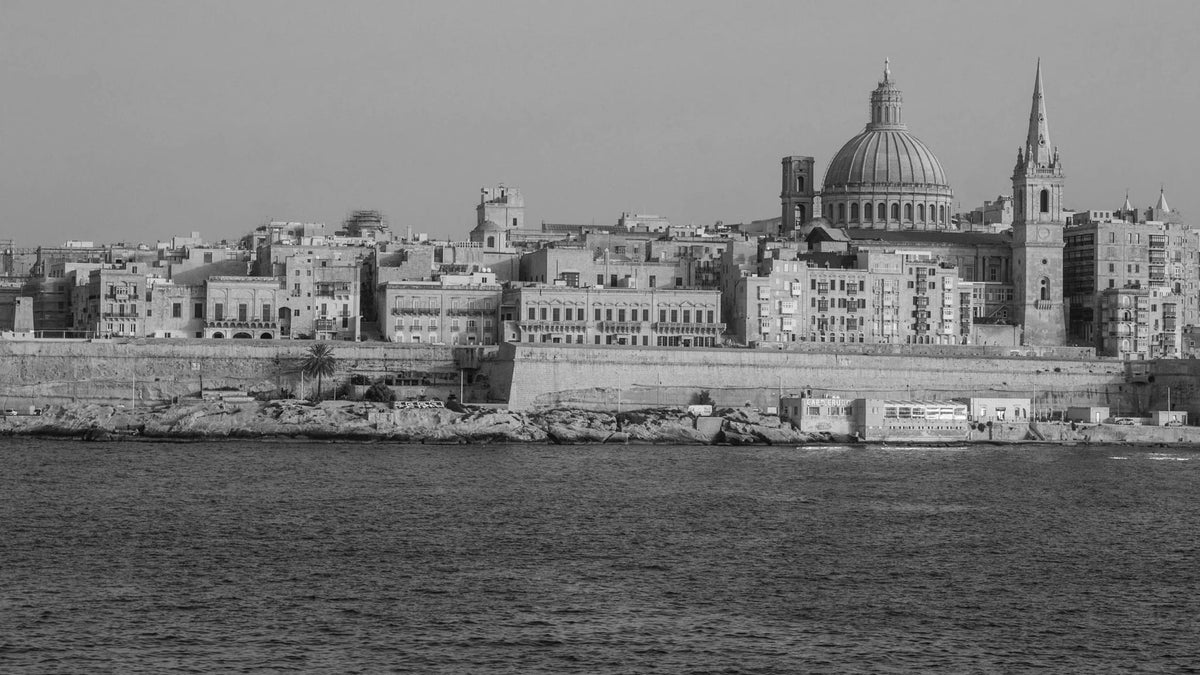
Valletta was made to be read at walking pace. Its limestone streets compress shade, salt air, carved doorways and sudden views of water into a compact urban theatre. Romègas Hotel, a newly opened 22-room stay on Old Bakery Street, understands that a hotel in this city should not attempt to compete with the fortifications beyond its walls. Instead, it works through sequence: a historic residence, a courtyard, rooms with Maltese balconies, and a rooftop looking towards Marsamxett Harbour.
Named for Mathurin Romegas, the sixteenth-century Knight of St John associated with the residence, the hotel occupies a palazzo restored over five years by EM Architects with archaeological input. Its arrival is timely. Valletta’s architectural inheritance can easily be reduced to scenery; Romègas makes a more persuasive argument for inhabiting it, placing contemporary hospitality within the scale, material language and compressed drama of the old city.
A palazzo, not a stage set
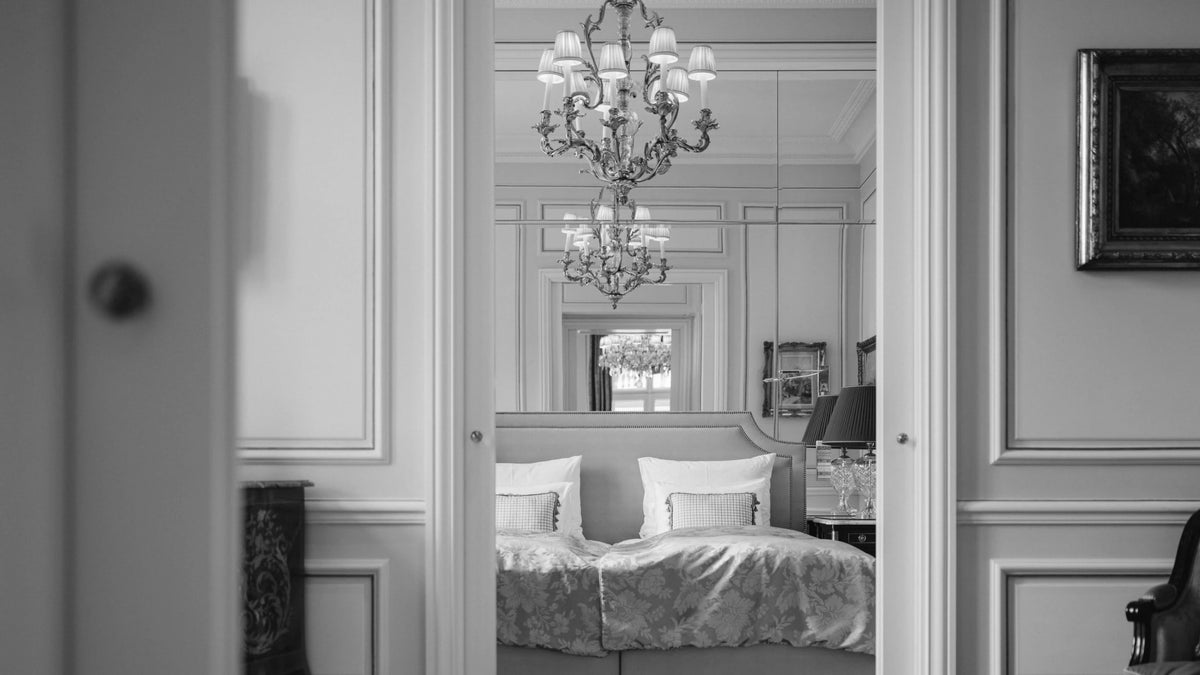
The value of Romègas Hotel Valletta lies in its refusal to smooth away the building’s age. The restoration retains limestone walls, traditional forms and the dense spatial character expected of an early Valletta residence, while bringing the house into a new rhythm of use. This is less an exercise in historical recreation than an edited coexistence between old fabric and present-day comfort.
That distinction matters in a city shaped by the Order of St John and built quickly after the Great Siege of 1565. Valletta’s streets were conceived as an ordered defensive grid, yet its lived character has always depended on smaller interruptions: shaded thresholds, internal courtyards, timber balconies and rooms whose proportions change as one moves away from the street. Romègas takes its cue from those transitions. The guest experience is not based on an oversized public lobby or a grand spectacle of marble; it is organised around the closer grain of a private urban house.
There are only 22 rooms and suites, a decision that gives the project a useful degree of restraint. Several rooms open onto traditional enclosed timber balconies, while the Grand Nobile Suite occupies a more ceremonious scale, with a duplex arrangement within the piano nobile. The hotel’s setting makes these details more than decorative gestures. In Valletta, the balcony is an instrument for watching the street without entirely joining it; it is architecture designed for both privacy and participation.
Contemporary Malta within old stone
The interiors bring a deliberately current register to the residence. Camilleri Paris Mode has worked with bespoke wooden panelling, Palladiana terrazzo and a neutral palette that lets the stone structure remain present rather than picturesque. This is complemented by commissioned work from Maltese artists, allowing the hotel to function partly as a small contemporary collection embedded in a historic house.
The most successful hotel restorations do not treat art as a finishing layer applied after the architecture is complete. Here, the artworks create another scale of encounter: something to notice on the way from room to courtyard, rather than an object placed for instant impact. It is an approach suited to Valletta, whose cultural richness is rarely experienced through a single monumental gesture. The city reveals itself in increments: a carved corbel, a weathered façade, an open shutter, the sound of a church bell carried through a narrow street.
The restaurant, Caviar & Bull Valletta, gives the house a sociable counterweight. Led by Maltese chef Marvin Gauci, it draws on Mediterranean ingredients and local produce, while the courtyard bar provides a less formal pause between a morning in the city and an evening meal. A hotel palazzo needs spaces that can absorb both seclusion and company; Romègas appears to understand that the former is most convincing when the latter remains possible but never compulsory.
The rooftop as a change of register
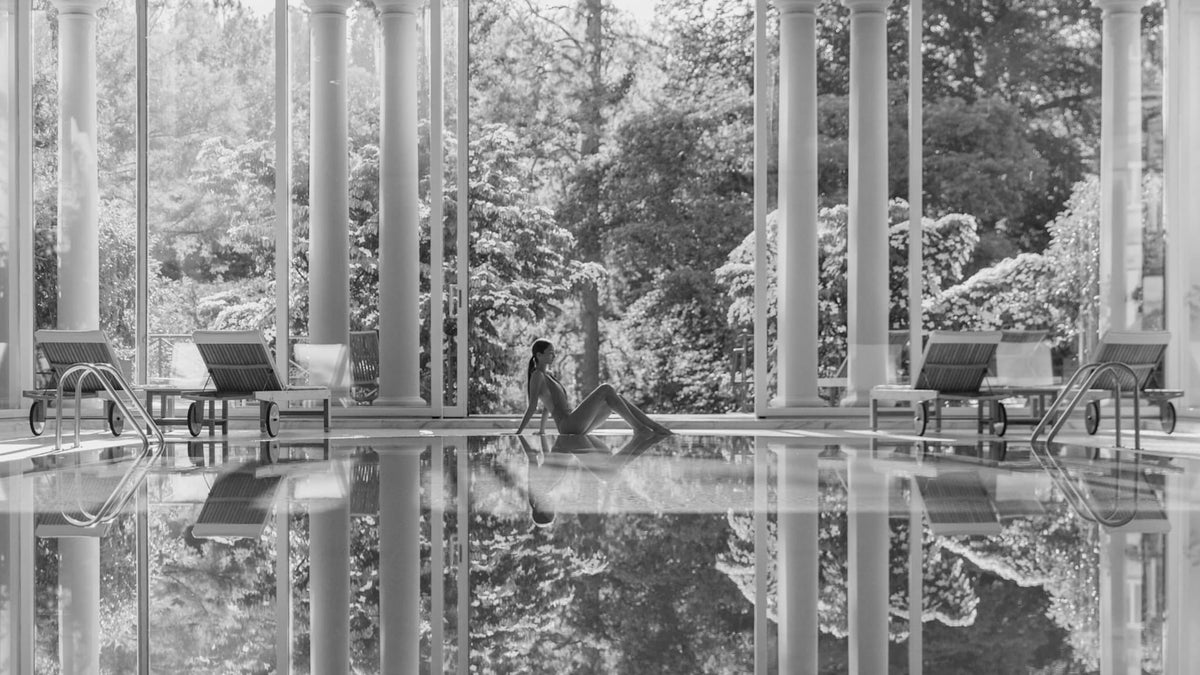
The project’s clearest release comes above the roofline. Romègas’s rooftop pool and terrace look across the historic skyline and Marsamxett Harbour, exchanging the closely held scale of the interior for open sky and water. It is a notable contrast, but not a disruptive one. Valletta’s relationship with the sea is always near, even when it disappears behind stone walls; the rooftop simply restores the horizon to the stay.
Such a space also offers a different rhythm to the city. After the concentrated visual information of the streets below, a swim or late-afternoon drink above the harbour becomes a deliberate interval rather than a resort-style diversion. The terrace is best understood as part of the architecture’s sequence: from street to residence, from courtyard to room, then out into air and distance.
A new reason to linger in Valletta
Romègas arrives at a moment when travellers increasingly look for hotels that can make an old city legible without turning heritage into costume. Its proposition is specific: not a generic luxury address placed in Malta, but a compact palazzo whose stone, balconies, art and harbour-facing rooftop are inseparable from Valletta itself.
That specificity has a bearing on how one dresses for such a stay. The appeal is in clothes that are composed enough for a courtyard aperitivo, yet relaxed enough for the private hours that precede it. The generous lines of sartorial loungewear by ILHEMENT suit that movement from suite to lobby and terrace: not as hotel uniform, but as a considered way of carrying the measured pace of a residence into everyday life.
In a city whose strongest pleasures are often architectural rather than programmed, Romègas makes a convincing case for staying close to the building. The reward is not simply access to Valletta, but time spent noticing how the old city continues to hold contemporary life.