Palace Hotel Luzern at 120: The Lake as a Grand Hotel Room
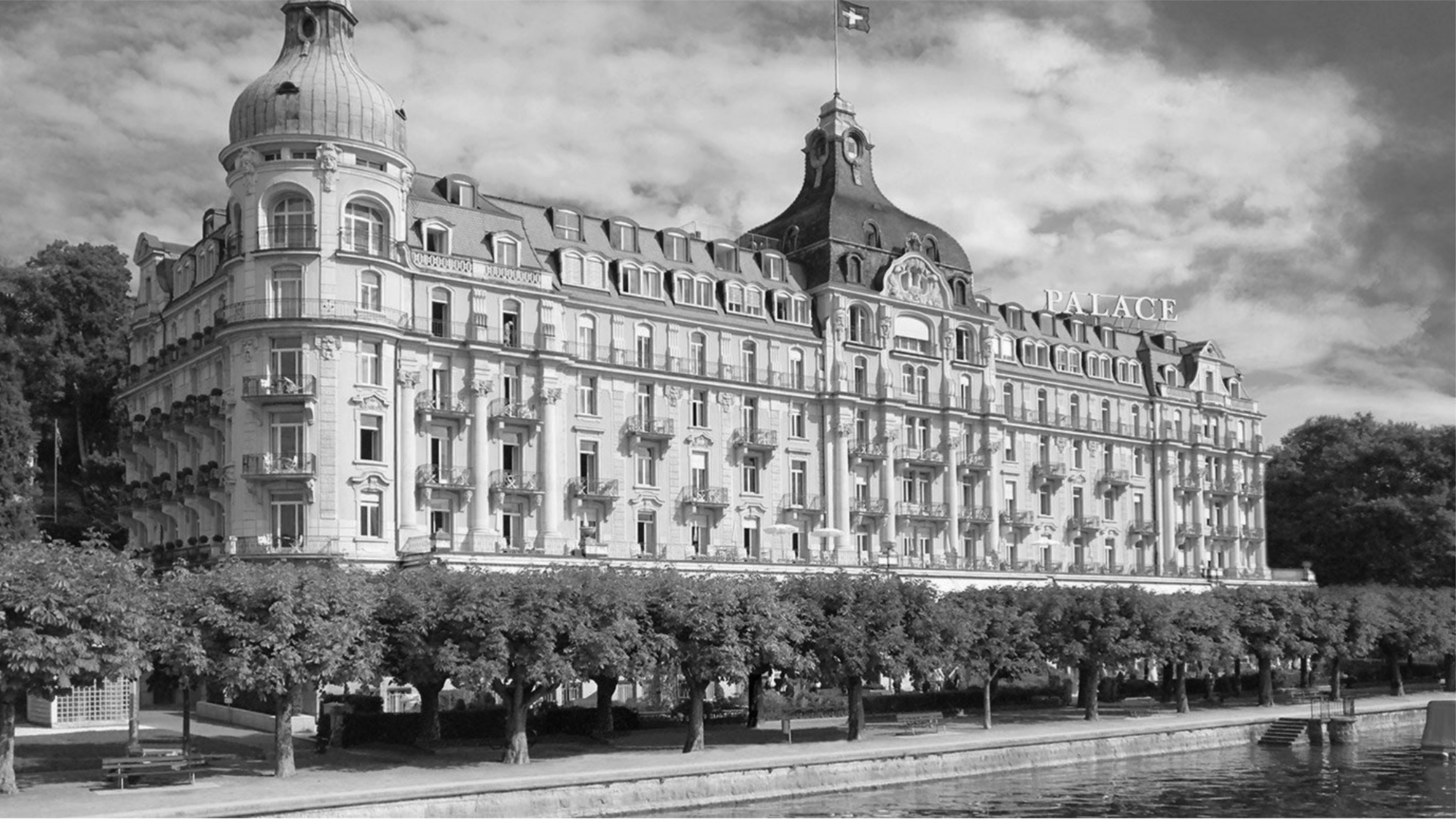
Some hotels are remembered for their rooms, others for a view. The enduring achievement of Palace Hotel Luzern is that it makes the threshold between the two feel almost imperceptible. Opened on 7 May 1906 on the shore of Lake Lucerne, the Belle Époque landmark has spent 120 years observing the lake’s shifts of colour, the measured traffic of boats and the changing expectations of those who come to rest beside it.
Its anniversary is not simply an occasion for looking back. It offers a timely consideration of what a great lakeside hotel can still provide: not spectacle, but a cultivated setting in which arrival is slowed, privacy is protected and the landscape quietly directs the day.
A hotel made for the promenade
Palace Hotel Luzern was conceived by the Swiss hotel pioneer Franz Josef Bucher at a moment when Lucerne was becoming a destination in its own right: a place where Alpine journeys were softened by the civilities of the lakefront. Its architecture belonged to the confident, cosmopolitan language of the Belle Époque, yet its position gave it a particular advantage. The façade addresses the promenade, while the rooms and public spaces turn towards water, mountain and weather.
This orientation matters. A grand hotel is often described through its interiors, but its real atmosphere is formed by the sequence between private room, verandah, terrace, pavement and shore. At the Palace, Lake Lucerne is not an ornamental backdrop. It is the hotel’s largest and most changeable room. Morning light arrives softly across the water; by afternoon the surface carries the movement of paddle steamers and passing clouds; at dusk, the distant slopes settle into blue-grey relief.
The building has therefore always offered more than accommodation. It frames a certain manner of inhabiting a place. One does not need to fill each hour. It is enough to take breakfast slowly, walk the promenade without destination, return for tea and watch the lake assume a different character before dinner.
Restoration without theatre
The hotel reopened in September 2022 after a five-year restoration, retaining the Palace name and its historic presence while introducing a more contemporary expression of comfort. This was a task that required restraint. Heritage hotels can lose their authority when restoration turns into nostalgia, applying decorative references without preserving the spatial intelligence that made the original building compelling.
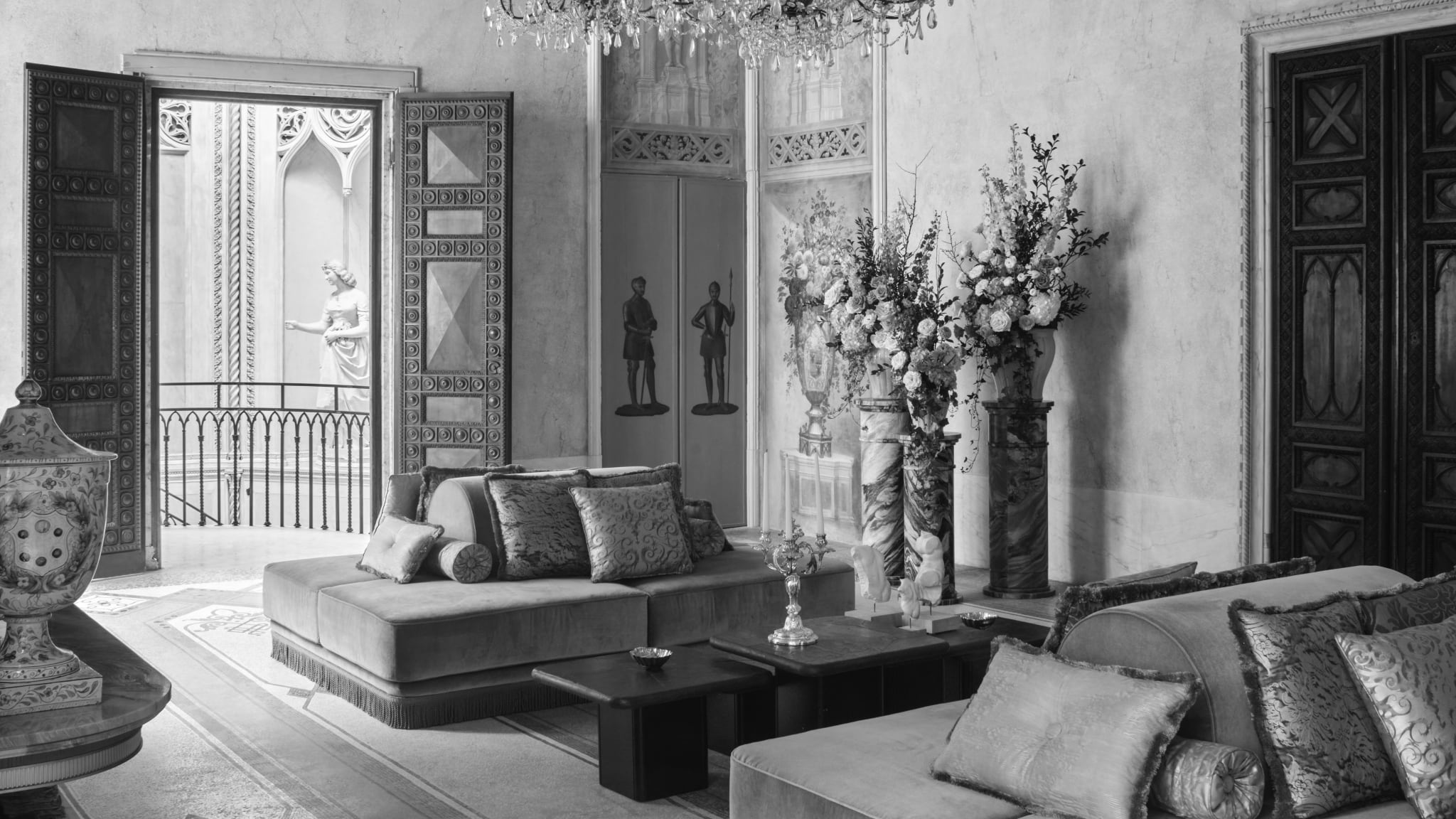
Here, the restoration concentrated on recovering the building’s material grammar. Original checkerboard marble floors, coral-toned scagliola columns, stucco surfaces and window frames were brought back into view. These elements lend the public rooms their sense of continuity, while newer furnishings and lighting avoid competing with the architecture. The result is not a recreation of 1906, nor a generic contemporary hotel enclosed by an old façade. It is a composed conversation between periods.
The same balance is felt in the guestrooms. Swiss oak parquet, pale panelled walls and carefully repaired joinery establish a quiet architectural base. The surrounding landscape informs the tones without making the rooms overly literal: lake grey, muted olive, cream, soft blue and the occasional depth of indigo. Such decisions give a room the quality required for genuine rest. Nothing asks too insistently to be noticed.
One of the most persuasive surviving details is Salon Alpine, which retains its original 1906 Belle Époque decoration. Its presence is a reminder that the longevity of a hotel depends not on preserving every surface unchanged, but on identifying the spaces that carry its memory most clearly. A historic room should remain capable of being used, not merely admired.
The return of the guest ritual
For its 120th year, the Palace has placed ritual at the centre of its programme. Guided tours of the building, an anniversary cocktail menu and a collection of commemorative pieces all acknowledge that heritage is better understood through use than display. More revealing still is the renewed attention to the lake itself.
A private excursion aboard the MS Meggenhorn, a 1926 launch originally built for Jakob Heinrich Frey-Baumann, gives physical form to the hotel’s relationship with Lucerne. The point is not transport alone. To leave the quay by boat changes one’s understanding of the Palace: its towers, terraces and long lakeside elevation become part of the wider shoreline, framed by the mountains beyond.
This is the older resort idea at its most convincing. A stay is not a succession of amenities but a sequence of well-made transitions. The room prepares one for the promenade; the promenade for the boat; the boat for a return to the verandah. Such rituals create ease because they remove the need to decide constantly what should happen next.
Afternoon tea in the Belle Époque verandah follows the same principle. It is neither hurried refreshment nor formal occasion for its own sake, but a pause with a clear sense of place. The lake remains visible, the pace of conversation changes and time becomes less transactional. Grand hotels once understood this instinctively. Their most valuable service was to make idleness feel legitimate.
The contemporary value of permanence
There is a temptation to treat heritage hospitality as an exercise in preservation. Yet the Palace’s anniversary suggests a more useful reading. Its appeal lies in continuity with adaptation: a building retains its proportions, craft and civic presence while adjusting the textures of comfort around them.
That approach is increasingly relevant. Travellers who have spent too long moving between anonymous terminals, screens and interchangeable interiors do not necessarily seek greater novelty on arrival. They seek a place with enough character to reduce the pressure to perform. A hotel with a recognisable past can offer this, provided its history has not been turned into a costume.
At Palace Hotel Luzern, permanence is found in modest but consequential gestures: solid doors closing on a calm room, the line of the promenade outside, a window held open to the lake, an unhurried table under the verandah. These are not luxuries of excess. They are luxuries of proportion, attention and time.
This philosophy also informs ILHEMENT’s approach to sartorial resort loungewear: considered pieces for the intervals between public life and private repose, when one wishes to feel composed without becoming over-dressed. In Lucerne, as in any enduring resort setting, the most lasting pleasures are the least insistent.
At 120, the Palace does not need to reinvent its reason for being. It only needs to continue doing what its setting has always asked of it: receive the traveller, open towards the water and make room for the art of staying awhile.