Hôtel du Cap-Eden-Roc and the Geometry of the Riviera
Some hotels are defined by a room, a restaurant or a view. Hôtel du Cap-Eden-Roc is defined by a sequence. It begins with the long, pine-lined approach to its pale nineteenth-century main house, then continues through the Grand Promenade towards the water, where the Eden-Roc Pavilion, rock-cut pool and private cabanas turn the shoreline into an ordered little world of their own.
That sequence explains why the property remains more than an admired Riviera address. It is an architecture of pacing: shade before glare, garden before sea, formality before release. On Cap d’Antibes, where the coast can so easily become a backdrop, the hotel has spent more than a century making the landscape part of a lived ritual.
A hotel built around an axis
The story began in 1870, when the Grand Hôtel du Cap opened in a Napoleon III-style building overlooking the Mediterranean. Its later life was shaped by Antoine Sella, the Piedmontese hotelier who revived the property at the end of the nineteenth century and recognised that its drama lay not only in the principal house, but in the descent towards the sea.
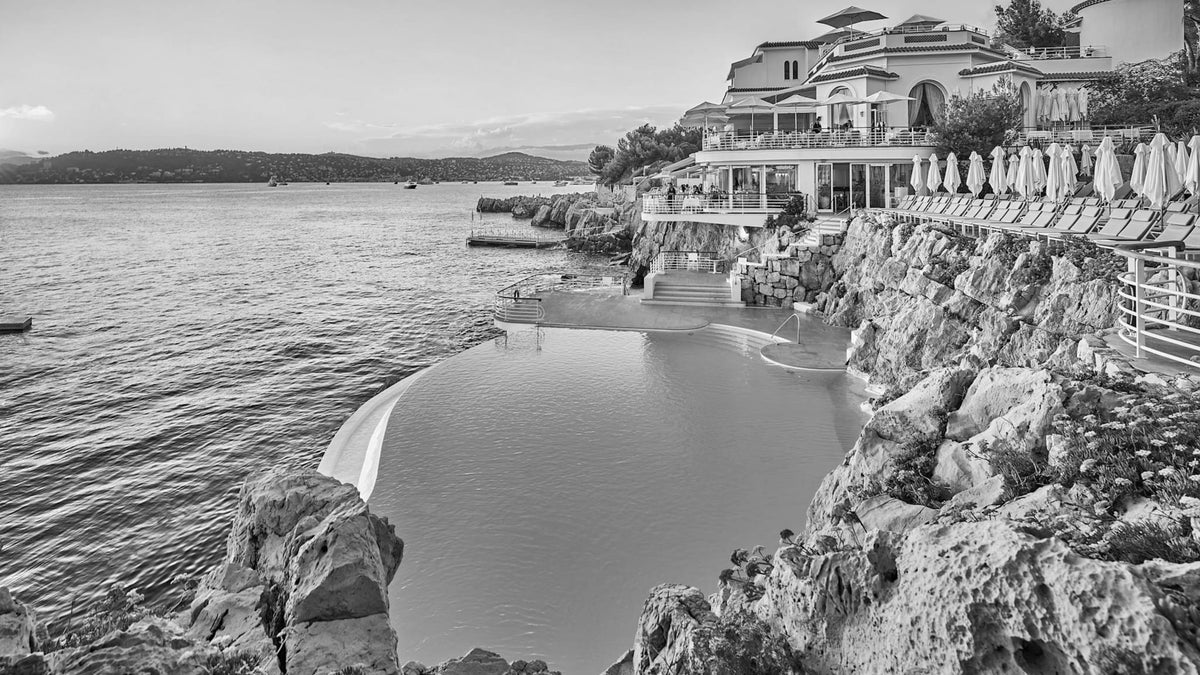
In 1914, Sella added the Eden-Roc Pavilion at the foot of the grounds. A seawater pool was carved into the rocky edge, making an architectural proposition from the meeting of built terrace and open water. It remains the hotel’s clearest gesture: not an infinity pool designed to erase the horizon, but a basin with edges, levels and a tangible relationship to the limestone below it.
The distinction matters. The pool does not pretend to be nature; it frames nature. The terrace, ladder, railings and stone retain the sense of a purposeful coastal structure. From there, the Riviera becomes less an abstract notion of blue water and more a set of materials and temperatures: salt, sun-warmed rock, painted shutters, canvas, pine resin and the cool interior after a swim.
The useful privacy of the cabana
The cabanas, introduced above the rocks in 1929, give the hotel much of its particular social intelligence. They are not merely convenient changing rooms. Their shutters, tables and sheltered seating create a smaller scale within the larger spectacle of the coast. One can be by the sea without being permanently on display to it.
This is the enduring lesson of the place. Privacy here is not achieved through remoteness or blank minimalism, but through thresholds. The main house is set behind trees; the pavilion is held below it; the cabanas look out while also providing enclosure. Even the famous procession towards the water has pauses built into it. The property understands that leisure is more persuasive when it has a rhythm.
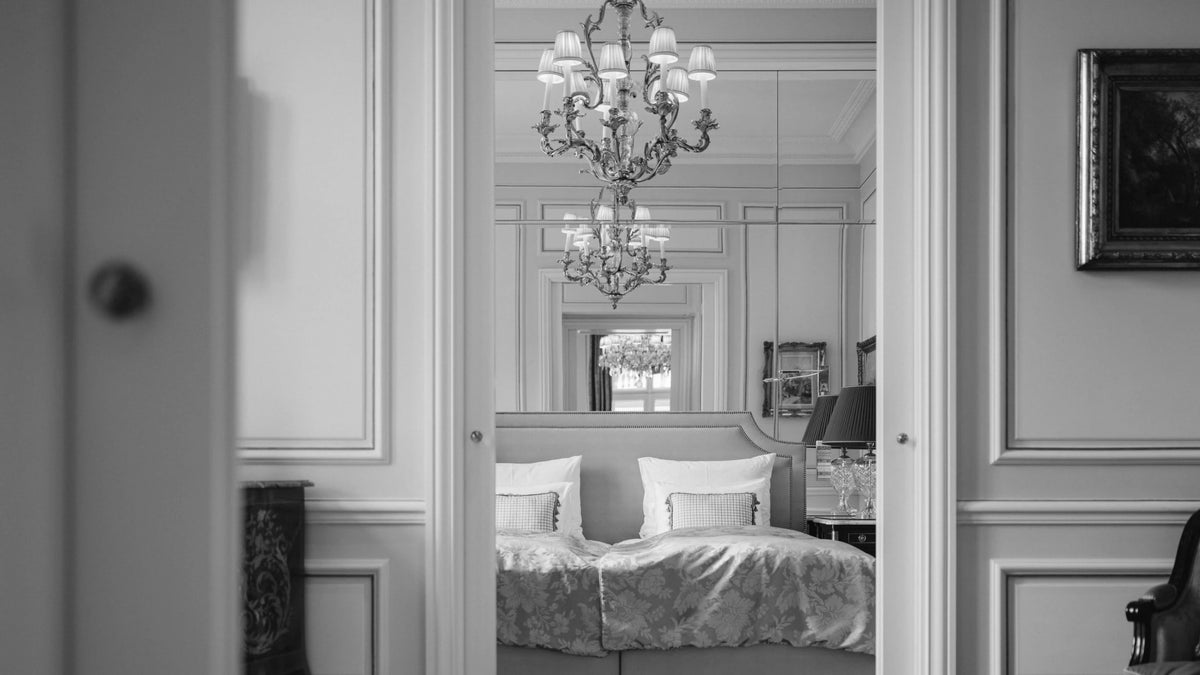
That rhythm has helped Hôtel du Cap-Eden-Roc resist the temptation to become a theme of itself. Its glamour is certainly part of the story, but the deeper appeal is practical and architectural: a guest can move from a bedroom to a shaded terrace, from the garden to the rocks, from an afternoon swim to dinner without the day losing its shape.
Old Riviera, continually edited
Continuity at a grand hotel should not mean immobility. The most convincing changes at Hôtel du Cap-Eden-Roc have tended to extend its existing vocabulary rather than replace it. The Eden-Roc Lounge, for example, reworked the pavilion interior through pale tones, rounded openings and a calmer coastal palette, keeping the building’s relationship with light and water at the centre.
The 2026 season also brought an open-air artistic stroll to the gardens, a development that makes sense precisely because the grounds have always been more than landscaping. Here, the garden is an intermediary space between the disciplined façade and the irregular coast. Art placed among its paths need not compete with the setting; it can make the act of walking through it more deliberate.
Such interventions work because the hotel’s visual language is already unusually complete. The pale main house, the dark-green pines, the striped and shuttered cabanas, and the white pavilion on the rocks do not require a new identity. They require attentive maintenance, intelligent additions and enough confidence to let the older architecture lead.
The ritual of staying put
Riviera travel is often described through movement: drives along the coast, boats across bays, lunches that become late departures. Hôtel du Cap-Eden-Roc proposes the opposite pleasure. Its most refined luxury is the case it makes for remaining on site long enough to understand the changing character of its spaces.
Mornings belong to the main house and gardens, before the sea becomes the day’s central event. Afternoons move naturally towards the pool and cabanas, where the architecture loosens and the horizon takes over. Evening restores ceremony: a return indoors, a change of light, a table set towards the water. These are modest transitions, but they make a stay feel designed rather than merely accommodated.
For ILHEMENT, that measured movement between private ease and shared spaces suggests the usefulness of sartorial resort loungewear: Swiss-designed pieces with generous proportions that can carry a composed day from suite to terrace, then back into ordinary life without becoming costume.
A permanent summer argument
The hotel’s real achievement is that it has made its rituals legible without making them rigid. The architecture gives each part of the day a setting, but leaves room for the guest to decide the tempo. A cabana can be a social stage, a reading room or simply a place to listen to the water below. The promenade can be a route to lunch or an excuse to walk slowly through the pines.
That is why Hôtel du Cap-Eden-Roc still feels culturally grounded rather than preserved behind glass. Its importance lies not in nostalgia for a lost Riviera, but in the precision with which it continues to arrange sea, garden, shelter and ceremony. On a coast defined by exposure, it has made an art of selective retreat.