Grand Hôtel Stockholm and the Craft of Staying Grand
There are hotels that preserve history behind glass, and there are hotels that continue to use it. Grand Hôtel Stockholm belongs decisively to the latter category. Facing the Royal Palace across Strömmen, the 1874 landmark has long carried the public role of a proper European grand hotel: a place for arrivals, ceremonies, dinners, discreet pauses and the occasional reason to dress for the evening.
Its recent redesign of rooms and suites does not attempt to turn that inheritance into a museum piece. Developed with Stockholm interior designer Sanna Nathanson of Studio Ramson, the intervention works instead through colour, texture, retained furniture and a close reading of the rooms already there. It is a modest proposition in an era of total reinvention, and therefore a more persuasive one. ([mynewsdesk.com](https://www.mynewsdesk.com/grand_hotel/pressreleases/grand-hotel-stockholm-unveils-redesigned-rooms-3465979))
A waterfront institution, not a period set
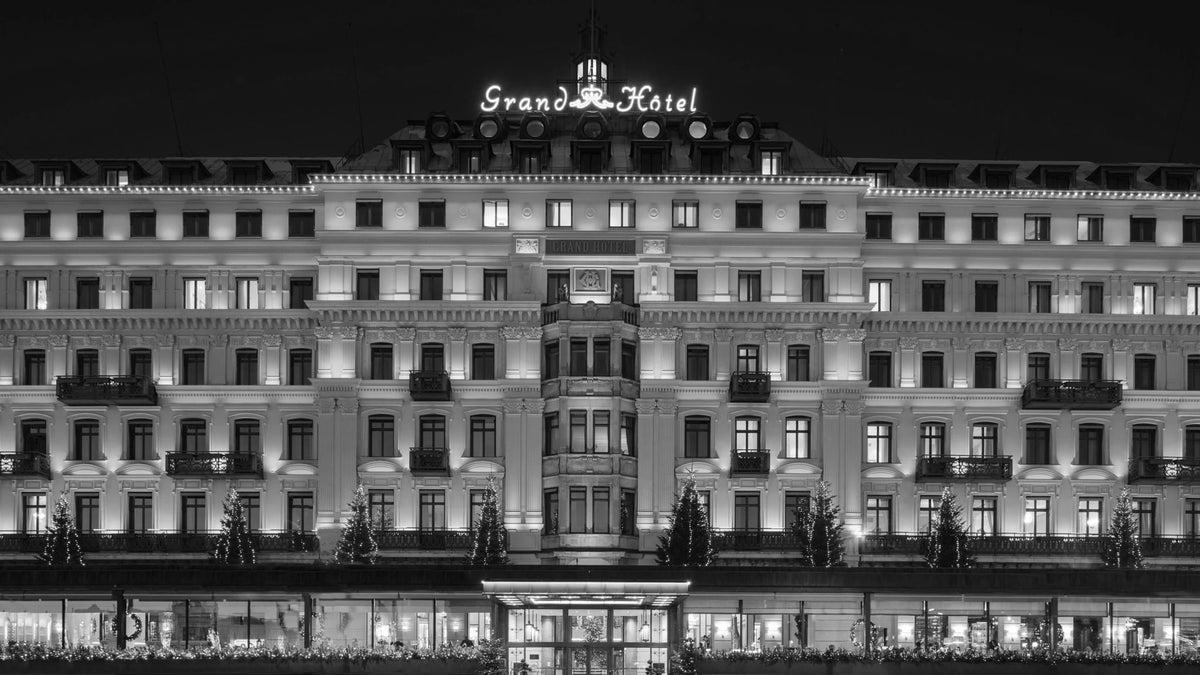
Grand Hôtel was founded by the French chef Régis Cadier, who set out to give Stockholm a continental hotel commensurate with a capital of commerce and culture. Its position remains unusually eloquent: the Nationalmuseum beside it, Gamla Stan and the Royal Palace directly across the water, ferries and city life moving at the edge of the façade. The setting lends the house a sense of ceremony before a guest has crossed the threshold. ([cntraveler.com](https://www.cntraveler.com/hotels/stockholm/grand-hotel?utm_source=openai))
Yet ceremony is only useful when it is inhabited. This is where the hotel has avoided the stiffness that can afflict a grande dame. Its public spaces range from the Cadier Bar to the Veranda, while the Nordic Spa and Fitness introduces heat, water and cold immersion to the rhythm of a city stay. The point is not nostalgia for a more formal age. It is the continued usefulness of rooms with character, scale and a clear social purpose.
Independent assessments still identify that balance. Condé Nast Traveller places Grand Hôtel among its 2026 Gold List selections, noting the hotel’s harbour-side address, historical patina and established food and wellness offer. The recognition matters less as a badge than as evidence that the property remains legible beyond its own narrative: it is not surviving on its façade alone. ([cntraveler.com](https://www.cntraveler.com/hotels/stockholm/grand-hotel?utm_source=openai))
The value of refining rather than replacing
The newly revised rooms take a deliberately incremental approach. Nathanson has introduced patterned textiles, fresh headboards, lighting and furniture, while the hotel has retained and reworked selected pieces already in place. In several rooms, wallpaper now begins in the entrance hall, giving the threshold a role in setting the atmosphere before the sleeping space appears.
The Bernadotte Suite makes the approach particularly clear. Pilasters have been painted into the surrounding scheme, and a mint-green treatment now travels across its walls and ceiling. Rather than treating original architecture and contemporary decoration as opposing forces, the room lets them operate as one field. The result is neither a reproduction nor a conspicuous signature interior. It is an argument for continuity as an active design discipline. ([mynewsdesk.com](https://www.mynewsdesk.com/grand_hotel/pressreleases/grand-hotel-stockholm-unveils-redesigned-rooms-3465979))
That distinction is important. Many luxury renovations mistake contrast for relevance, stripping out visual memory in favour of a neutral international language. Grand Hôtel’s update suggests another route: preserve the proportions, repair the useful pieces, introduce character where the experience needs it, and accept that longevity can be more expressive than novelty.
Material confidence over Scandinavian shorthand
Stockholm is often reduced to a shorthand of pale timber, white walls and rigorous minimalism. Grand Hôtel has never subscribed to that simplification. Its world is richer: chandeliers, gilded detail, patterned carpets, marble, generous ceiling heights and rooms that acknowledge the city’s royal and mercantile histories without becoming theatrical.
The refreshed interiors sharpen that identity through tonal control rather than visual excess. Colour is used to give rooms a particular emotional temperature; fabric and finish restore tactility; existing objects are allowed to keep their age. This is not an anti-modern position. It is simply a refusal to treat every update as a reset.
There is a useful parallel with Stockholm itself. The city’s appeal lies partly in its ability to hold water, stone, commerce, monarchy and everyday life in close proximity. Grand Hôtel’s best rooms understand that a hotel need not compete with this setting through spectacle. They frame it. A harbour view, a high window, a well-made chair and the gradual change of northern light can do more than an over-programmed interior ever will.
Rituals with a reason to endure
A grand hotel earns its name through repetition. At Grand Hôtel, that repetition is embedded in the daily sequence: a breakfast looking towards the palace, a drink at Cadier Bar, a sauna and plunge-pool interval, dinner in a room built for conversation rather than speed. These are not invented rituals; they are activities given greater clarity by setting and service.
The hotel’s media archive is revealing in this respect. Alongside images of suites and salons are a formal exterior, the conservatory-like Vinterträdgården, the mirrored Spegelsalen and the spa pool. Together they show a property that moves between urban theatre and private restoration without needing to invent separate identities for each. The architecture provides the continuity.
For guests, that continuity changes the meaning of time indoors. A suite is not merely somewhere to withdraw. It becomes part of a sequence that can continue into the lobby, a waterside table or the spa, then return to the room without a jarring shift in mood.
Clothing for the spaces between
This is also why the most relevant resort wardrobe is not confined to the bedroom. At a hotel with Grand Hôtel’s cadence, comfort benefits from enough line and presence to travel from suite to shared space. The generous proportions of Swiss-designed unisex loungewear offer a considered way to inhabit those intervals: not as costume, but as clothing that understands the difference between being at rest and being ready to re-enter the day.
Grand Hôtel Stockholm’s redesign makes a similar case in interiors. It does not chase a new personality. It gives an existing one better materials, more nuance and room to breathe. In a hotel culture too often preoccupied with the reveal, that patience feels not conservative, but quietly radical.