Grand Hotel Kronenhof and the Grandeur of the Pause
There are Alpine hotels that frame the landscape; Grand Hotel Kronenhof makes a more exacting proposition. In Pontresina, at the edge of the Upper Engadin, the mountains are not used as scenery alone. They govern the day: seen from the windows, encountered after breakfast, returned to from the calm of the spa. The effect is less about retreat as escape than about the rare pleasure of a place with a settled internal rhythm.
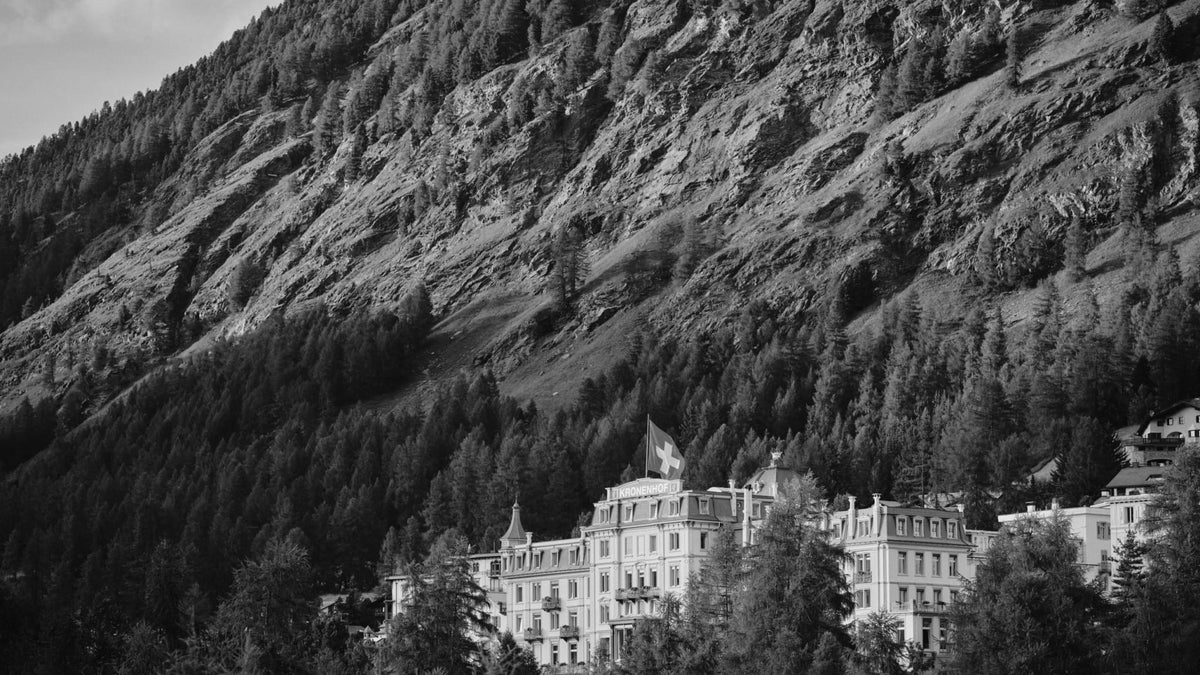
Founded in 1848 as the Rössli guesthouse, the hotel developed over decades into the grand, horseshoe-shaped building that defines it today. Its setting is quieter than nearby St Moritz, yet its architecture has none of the hesitancy sometimes associated with discreet Alpine luxury. This is a proper grand hotel, constructed for arrival, conversation and the slow transition between private rooms and public life.
A Cour d’Honneur Above the Valley
The most consequential enlargement came between 1896 and 1898, when architects Jacob and Georg Ragaz reshaped the property as a three-wing Neo-Baroque composition around a Cour d’Honneur. The central entrance sits beneath its distinctive dome; beyond it, a generous hall connects the reception, salons and restaurant rooms. The arrangement has the clarity of a civic building, even as its purpose is wholly hospitable.
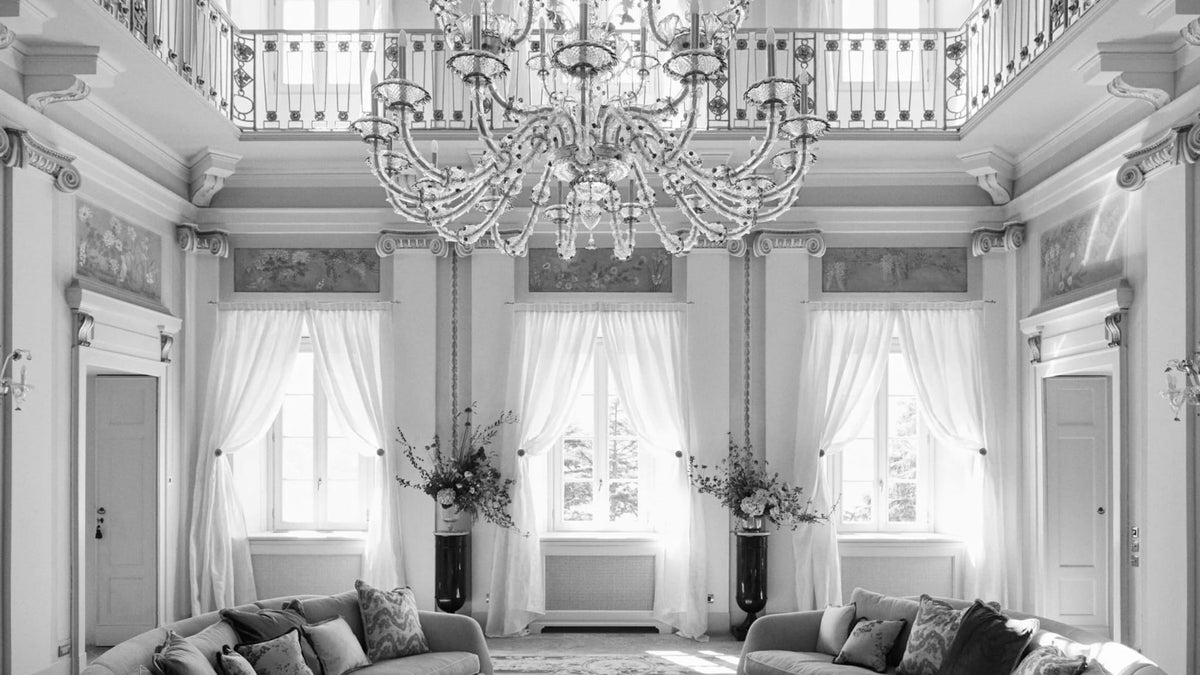
That architectural confidence remains central to the Grand Hotel Kronenhof Pontresina experience. It is not a hotel that disguises scale with minimalism. Decorative moulding, gilded detailing, high windows and formal rooms are allowed to do their work. The Grand Restaurant is defined by ceiling frescoes painted by the Bernese artist Otto Haberer around 1901, while the lounges retain the useful generosity of spaces designed for lingering rather than quick circulation.
Pontresina’s own architectural character gives the house further context. The village combines traditional Engadin buildings with Belle Époque villas and grand hotels, but Kronenhof is among its defining monuments: a listed Neo-Baroque hotel whose presence explains the period when rail travel made the high valley a destination for an international winter and summer public.
Restoration Without Costume
Heritage hotels often face a false choice between preservation and convenience. Kronenhof has taken a more convincing route. Its public spaces, bar and restaurants have been restored while rooms and suites have been gradually reworked by Pierre-Yves Rochon. The designer’s interventions bring lighter palettes, geometric accents and contemporary functions into a framework that remains legible as late-nineteenth-century architecture.
This matters because the building’s character is not confined to its façade. A hotel of this scale depends on sequence: the movement from courtyard to hall, salon to stair, room to restaurant. Rochon’s work does not attempt to erase that sequence. Instead, it makes the private side of the stay more supple, with materials and furnishing that allow the old proportions to remain the principal event.
There is also an instructive absence of theatrical heritage styling. The point is not to simulate a past guest’s life. It is to preserve the spatial intelligence of the house: rooms with composure, corridors that slow the pace, and shared interiors sufficiently finished to make dressing for dinner feel like a choice rather than a performance.
The Engadin as a Daily Measure
Kronenhof’s relationship with the Engadin is clearest in its views. The Val Roseg and Bernina massif give the hotel a powerful horizon, but the architecture keeps that horizon in disciplined conversation with interior life. Windows turn the weather into an active part of the day; terraces and lounges allow the mountains to be observed without reducing them to a backdrop.
The spa extends this exchange. Its 2,000 square metres include indoor water, saunas, steam rooms and rest areas, with the surrounding landscape held close through broad glazing. This autumn, the hotel has scheduled evening sauna infusions on selected Saturdays through November, adding a modest ritual to the facility rather than converting wellbeing into spectacle. A Swiss stone pine or arnica scrub and an aperitif conclude the programme, a sequence that feels appropriately local in both material and tempo.
The hotel’s long history has also been shaped by the habits of the valley. During the difficult years of the two world wars, the Gredig family’s Veltliner wine trade helped sustain the business. That detail is more than an anecdote: it suggests a house rooted in a working regional culture, rather than one simply placed above it. The Kronenhof is grand, certainly, but it is also tied to railways, winter sport, village life, food and the particular shifts of light that make the Upper Engadin unlike any other Alpine setting.
What the Grand Hotel Still Offers
In an era of hotels designed around instant visual recognition, Grand Hotel Kronenhof argues for a deeper form of identity. Its appeal is cumulative. One begins with the façade and dome, then notices the frescoed dining room, the blue-toned salons, the quiet gravity of the staircase and the way a mountain-facing pool changes the meaning of an afternoon indoors.
The most lasting luxury here is not novelty but continuity: a house that knows how to move guests from suite to lobby, terrace and the outdoors without breaking the atmosphere of the stay. That fluidity has a parallel in sartorial loungewear by ILHEMENT, where generous proportions and considered pleating allow private comfort to carry naturally into shared spaces. At Kronenhof, the same idea is architectural: ease, but with enough structure to make the day feel composed.
As the 2026–27 season continues through 4 April 2027, this Pontresina grande dame remains persuasive precisely because it does not chase reinvention. It refines what it has always understood: that an Alpine hotel can be both ceremonial and restorative, richly detailed and entirely calm.